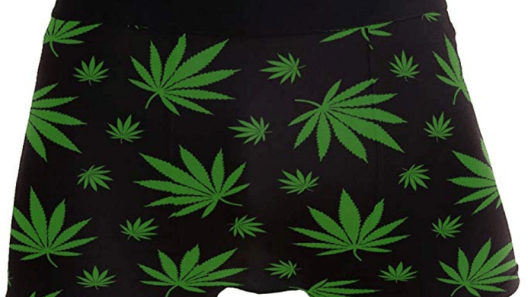
For years, “weed gear” meant the same predictable lineup: a loud leaf tee, a novelty grinder necklace, maybe a neon beanie that screamed more joke than style. It was merchandise first and clothing second—bought for the punchline, worn for the photo, then forgotten in a drawer. But as legal markets expanded and cannabis culture moved out of the shadows, apparel tied to cannabis has been quietly growing up. The goal isn’t to look like a stereotype; it’s to build pieces people want to wear.
That shift is showing up in the business playbook. Fashion labels have tested collaborations and capsule drops that let them borrow cannabis adjacency without touching the plant, using partnerships to reach new audiences while staying inside regulatory lines. The Business of Fashion has covered how fashion and legal cannabis players use collaboration as a route into a category that’s becoming more mainstream.
Cannabis-native brands learned a parallel lesson: clothing can be the most scalable, legally portable part of a cannabis identity. Cookies, one of the most recognizable lifestyle names in the space, has described how it leaned into apparel because cannabis itself can’t be trademarked the same way—while clothing and accessories can carry protected logos and designs across markets. In practice, that turns a hoodie into more than a hoodie: brand protection, community signaling, and a walking billboard.
The look has evolved with the strategy. Trade coverage from MJBizDaily notes the move away from “stoner chic” staples toward sleeker streetwear and fashion-forward lines aimed at consumers who want to look put-together, not cartoonish. The leaf hasn’t vanished, but it’s no longer the only idea. Designers pull from skate and hip-hop silhouettes, use cleaner typography, and treat cannabis references like insider cues: subtle, intentional, repeatable.
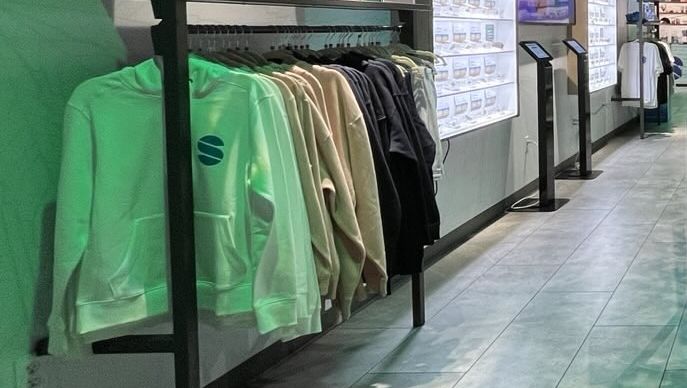
Retail is also pushing the change. As dispensaries reimagine themselves as lifestyle spaces—closer to boutiques than head shops—the apparel on the rack has to match the environment. Bon Appétit recently described stores leaning into design-forward, concept-store energy to welcome “cannabis-curious” shoppers. When the shop feels curated, the merch can’t feel like an afterthought.
So what separates real apparel from novelty weed gear?
First is construction. Real brands obsess over fabric weight, hand feel, seam quality, shrink resistance, and consistent grading across sizes. Second is design restraint. A graphic can still be loud, but it needs a point of view—palette, typography, and silhouettes that look coherent season to season. Third is function: pieces that layer well, move well, and wash well, without relying on a single joke to stay interesting.
There’s also cultural maturity at work. Early novelty gear was about being seen. Today’s better collections are about belonging: a wink to a city, a scene, or shared values around creativity, wellness, or community. Even when the cannabis reference is obvious, it’s framed like other lifestyle signals—the way surf, motorcycle, or sports brands translate identity into wearable staples.
The result is a new cannabis wardrobe: less gag gift, more everyday uniform. Cannabis identity hasn’t disappeared—it’s simply being expressed with the standards shoppers expect from any modern brand. And as long as companies keep treating clothing as product, not punchline, the shift will keep accelerating: from novelty weed gear to real apparel that earns a permanent spot in the rotation now, for years to come.